Davis Method Events, Workshops, & Presentations

- This event has passed.
Webinar: Behaviour vs Development: Why developmental foundations matter for autistic individuals
April 30 @ 12:00 pm - 1:00 pm PDT

When an autistic person struggles with a meltdown, a refusal, repetitive behavior, the instinct is often to manage the behavior. But what if the behavior isn’t the problem? This free webinar looks at why a developmental approach to autism gets better long-term outcomes for autistic individuals, than a behavioral one.
[mailerlite_form form_id=4]Who this webinar is for
This session is open to anyone who is autistic, or supports or works with autistic individuals:
- Parents and caregivers looking for approaches that go beyond compliance
- Teachers, therapists, and support workers
- Anyone who has tried behavioral strategies and found the results weren’t what was expected
What you’ll learn
- Why behavior is often communication, compensation, or coping, it is not the problem itself
- How behavioral and developmental approaches differ in practice
- The Davis Autism developmental framework: Individuation, Identity Development, and Social Integration
- What Davis-specific tools look like in practice, including Auditory Orientation, Concept of Self, and our signature clay modelling
- A real before-and-after case example showing what developmental growth actually looks like
Behavior is visible. Development is what’s underneath.
Most autism interventions focus on what you can see: the meltdown, the refusal, the rigid rule-following. Behavioral approaches try to reduce or replace those responses using rewards, repetition, and prompts. That can produce short-term results — but the change often doesn’t transfer to new situations, and it rarely builds the internal understanding that makes real independence possible.
The Davis developmental approach asks a different question: what developmental foundations need supporting? Behavior is often a sign that something underneath hasn’t been fully integrated yet. When you address that, you get change that sticks.
The three developmental foundations
The Davis approach builds on three sequential stages. Each one depends on the last.
1. Individuation — “I am Me”
A grounded sense of self as separate from others and the environment. This underpins body awareness, sensory regulation, attention, and self-regulation. In the Davis Autism Approach, this is supported through Auditory Orientation and the Concept of Self. Without this foundation, everything built on top is unstable.
2. Identity Development
Learning the concepts that help a person understand themselves and the world — not through repetition, but through experience. The Davis approach uses clay modelling and real-life activities to make abstract concepts concrete and personally meaningful. This is where understanding actually forms.
3. Social Integration
The ability to connect with others, read social situations, and respond flexibly. In Davis, this stage addresses concepts like Another/Others, types of relationships, and a framework for decision-making. It can only develop once Individuation and Identity Development are in place. Trying to build social skills without those foundations is why scripted social responses often don’t generalize.
What this looks like in real life
From behavior to developmental growth: one family’s experience
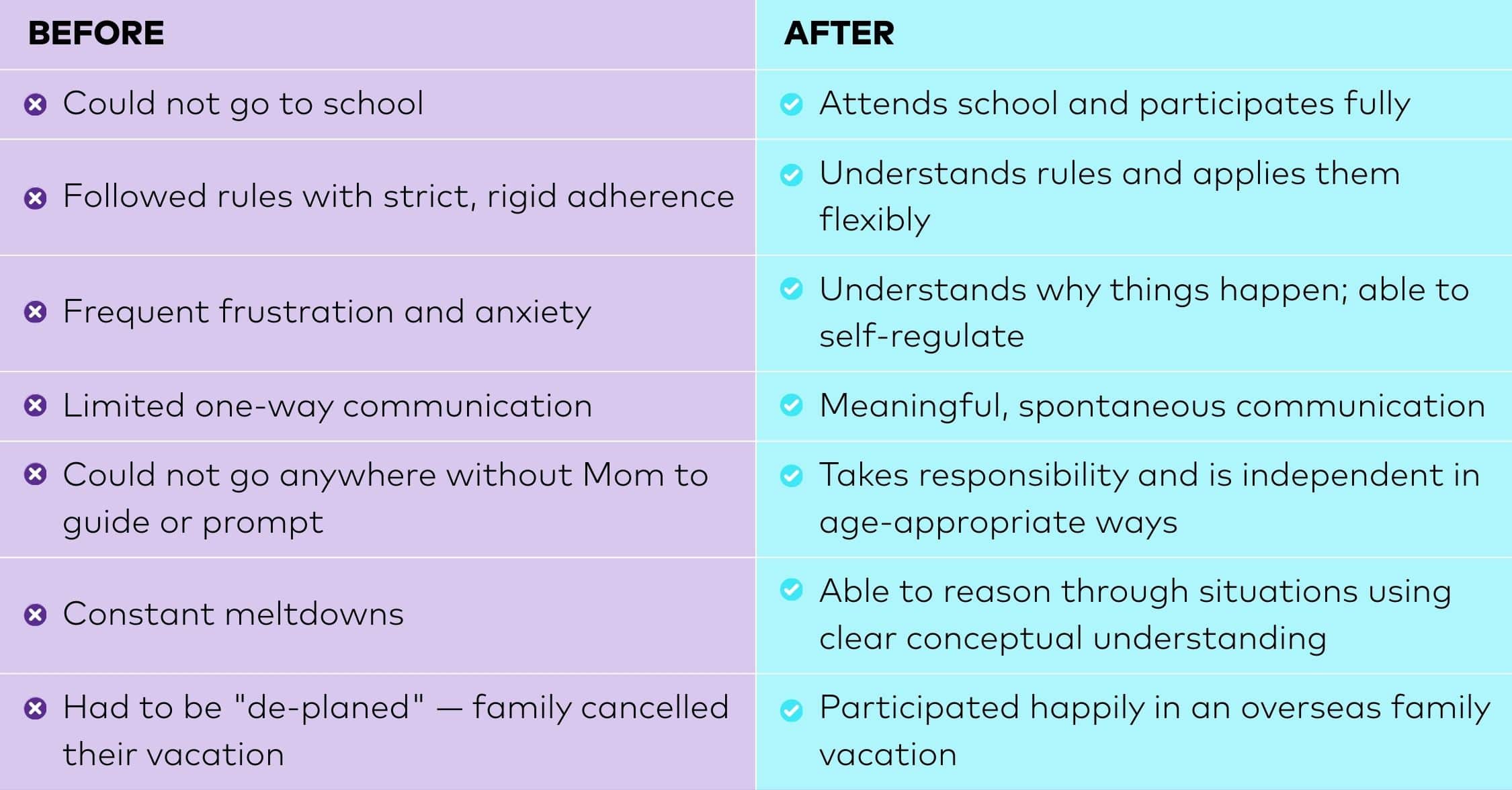
When developmental foundations are strengthened, behavior no longer needs to be managed, it begins to evolve naturally.
Your presenters
Melanie Curry: Chief Optimization Officer, Davis International | Director, Davis Autism International
Melanie Curry has spent more than 15 years working with neurodivergent individuals of all ages through the Davis Approach®. As Director of Davis Autism International, she oversees the organization’s global training and licensing from her base in Aotearoa, New Zealand. A former international educator, Melanie brings deep practical experience to her roles as Davis Methods Trainer and Workshop Presenter — and a genuine passion for approaches that build real, lasting change from the inside out.
Anne Mataczynski: Davis Autism Support Coordinator | Workshop Presenter | Facilitator Trainer
Anne Mataczynski has been working with autistic individuals through the Davis Approach since 2005. Based in Wisconsin, she helps families and individuals find the right support, and presents Davis Autism Approach® Workshops and Davis Concepts for Life® Workshops to parents, educators, and professionals across North America. Anne also trains new Davis Autism facilitators and supervises autism trainees, bringing over two decades of hands-on experience to everything she does.
Register free
This webinar is free to attend. Register below to secure your spot.
[mailerlite_form form_id=4]Can’t make it live? Register anyway and we’ll send you the recording.
Questions? Contact us at autism@davismethod.com